Cleaners and Finishes to Keep Off Sauna Wood

Sauna wood gets hot and damp, so what works on a kitchen counter can go wrong here. Makers name a few things to keep off it. They don't agree on all of them, so your own manual breaks any tie.
Cleaners
Household cleaners. Sun Home says most household cleaners contain harsh chemicals that can damage the wood and create unpleasant fumes when heated.1
Bleach and ammonia. Sun Home puts both in its "What to Avoid" list.1 Never mix the two. One extension service page says plainly: never mix ammonia and bleach.2
Where Finnleo differs. Finnleo suggests occasionally wet-mopping with a liquid deodorizing cleaner such as Lysol or Pine-Sol.3 Sun Home advises against household cleaners, so the two makers disagree. Follow your own manual.
Disinfectants. Thermory says to avoid cleaning agents not suited to wood, "such as disinfectants."4
Pressure washers and running water. Thermory's advice is to avoid both on a sauna.4 Sun Home likewise lists pressure washing and soaking the wood.1
Paints, varnish and stain
Finnleo's first routine rule is not to paint, varnish or stain the interior surfaces.3 Its reason is that the wood needs to breathe, and that artificial finishes make the wood surface much hotter and create the possibility of fumes from the treatment.3
Finnleo makes an exception: door handles and floor boards can be treated with a wood sealant or polyurethane finish.3
Thermory agrees on the rest. It says not to use paints or varnishes in your sauna, as the wood must be able to breathe.4
HUUM draws a line within finishes. It says sauna lacquer is not used on bench boards.5 That makes a lacquered bench a good question for a maker.
Oils, where makers differ
Here advice splits. HUUM names paraffin oil and linseed oil as the most common options for treating wood.5 Harvia recommends paraffin oil for benches and advises testing it somewhere hidden first, such as under a bench, to see how it affects the color.6
Sun Home takes the other side. Its avoid list includes oil-based products that can trap heat or create odors.1
So an oil isn't wrong everywhere, and it isn't right everywhere. What the maker of your sauna and wood allows is what counts. Don't pick an oil because a shop shelf has one.
Heat and fumes
Fumes are the common thread. Sun Home warns of unpleasant fumes when household cleaners are heated, and Finnleo raises fumes from wood treatments.13 Thermory adds that excessive heat could create a fire hazard or cause warping, so it says not to heat the sauna above the heater maker's maximum temperature.4 That's about the heater, not the cleaner, but it's a reminder that the room runs hot.
Reading a label
A few checks cost nothing:
- Does the label name sauna wood, or heated wood, as a use? If not, ask the maker.
- Does it say it can be left on the surface, or must it be rinsed off?
- Does it warn about heat, fumes or ventilation?
If the label doesn't answer, ask the maker. Where Thermory recommends treating wood, it names a breathable wood preservative.4
The whole-room routine is in the step-by-step cleaning guide. Marks that won't lift are covered in the stain guide.
Sources used
- How to Clean and Maintain Your Sauna, Sun Home Saunas support
- Mildew Removal, UF/IFAS Extension Jefferson County
- Sauna Care and Maintenance, Finnleo
- Useful tips for sauna care and maintenance, Thermory
- The basics of sauna maintenance, HUUM
- Five sauna maintenance tips for getting your sauna ready for summer, Harvia
More sauna upkeep
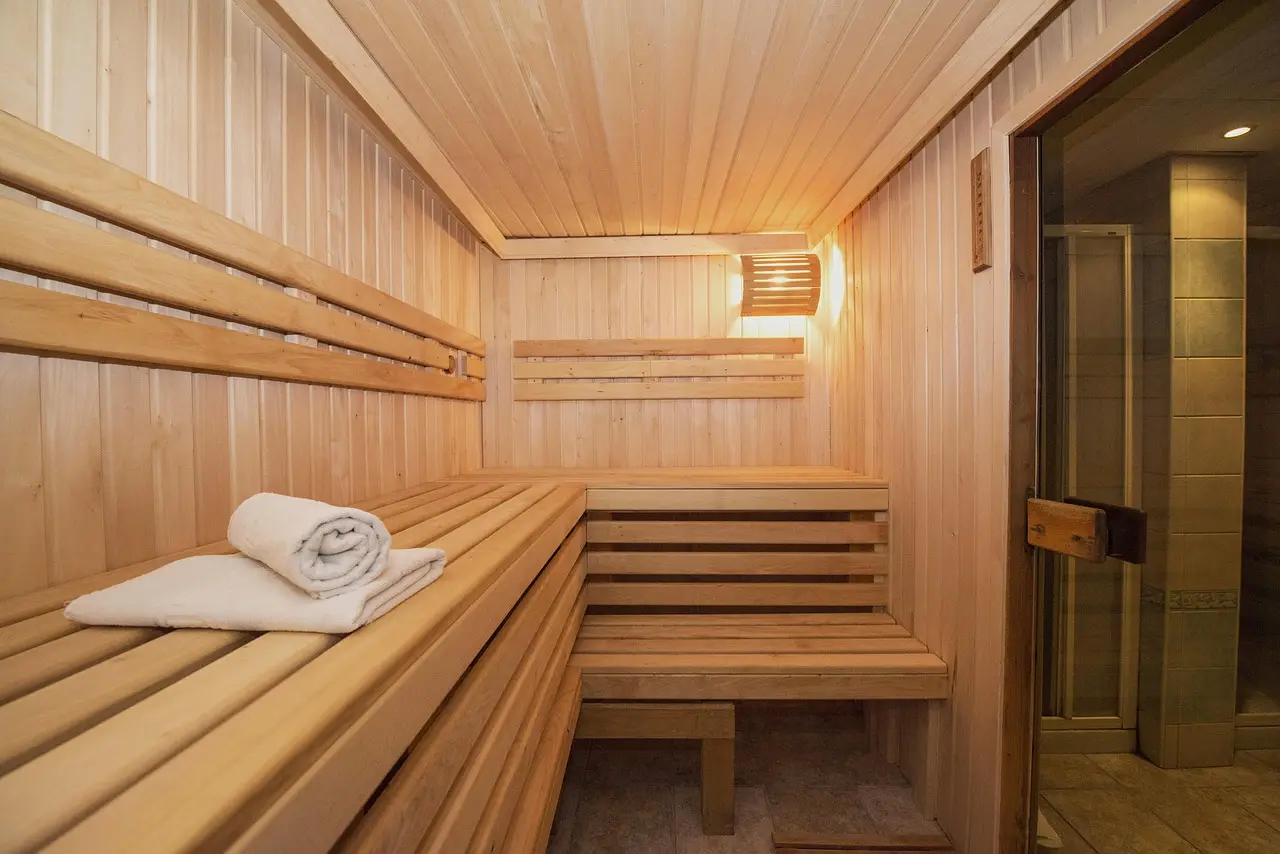 How to Clean a Wood Sauna Room, Step by StepA plain walkthrough for cleaning a wood-lined sauna room, from sweeping to drying, and which common cleaning habits can harm the wood.
 Cleaning Sauna Benches and BackrestsWhat makers say to use on sauna benches to lift sweat marks, how to wash along the grain, and what to avoid on the wood.
 Removing Sweat Stains and Dark Marks from Sauna WoodWhy sauna benches darken, what makers say can lift sweat marks, and when light sanding comes into it.